Neighbor spoofing protection
Neighbor spoofing na when spam callers fake a number wey looks close to yours. Block Guard now treats dis as one part of a bigger anti-spoofing stack wey also include STIR/SHAKEN checks, campaign suppression, logs, and allow rules.
In app
Neighbor spoofing na an explicit product control
This na not implied by a generic spam switch. Block Guard exposes neighbor-spoofing protection as its own layer so you fit see where it fits alongside carrier verification and known-spammer checks.
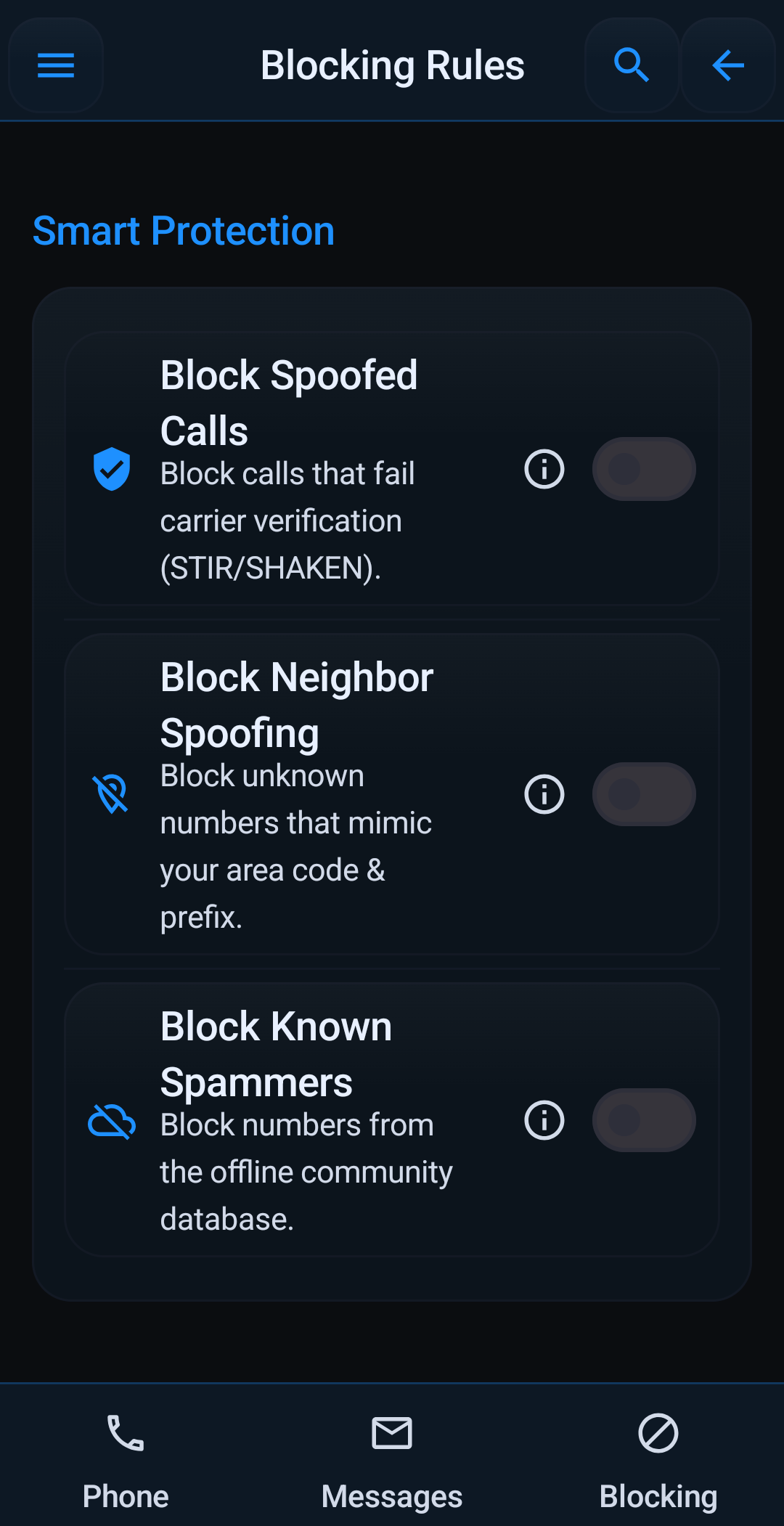
Scammers use local-looking numbers because people still answer them more often. That makes neighbor spoofing one of di most common patterns behind robocalls and scam calls.
How Block Guard handles spoofed local numbers
- Neighbor spoofing protection looks for unknown numbers wey mimic your area code and prefix.
- Anti-spoofing / STIR/SHAKEN gives you a separate carrier-verification signal.
- Rotating prefix campaign protection helps when many similar numbers cycle through one prefix.
- Call storm suppression temporarily quiets rapid unknown-call bursts.
Use precise rules, not just one-off blocks
- Block exact numbers when one caller keeps returning.
- Block similar numbers by same prefix or same area code from di blocked-call detail screen.
- Use wildcard or regex rules if di scam pattern na broader than a single number.
- Whitelist family, work, and real local businesses so strong spoofing rules do not catch them.
What to review after a spoofed call
- Blocked Call Log explains whether di call matched neighbor spoofing, anti-spoofing, known spam, or another rule first.
- Protection Center helps you see if di big protections na enabled.
- Analytics shows whether di same local pattern keeps coming back over time.
For broader robocall reduction, read stop robocalls. For blocked-call review and tuning, read Protection Center and analytics.
Quick links: Stop Robocalls · Protection Center · Best Call Blocker · Full Features